In Phoenix’s extreme heat, roofing materials often wear out faster than expected. A full roof replacement can be costly, but there is an alternative solution: roof coatings. This article explains the different types of roof coatings and how they can help reduce energy costs by reflecting heat. You’ll learn about the key differences between common coating systems and how to prepare a flat roof for the monsoon season. Understanding these factors can help extend the life of your roof for years and avoid unnecessary expenses.
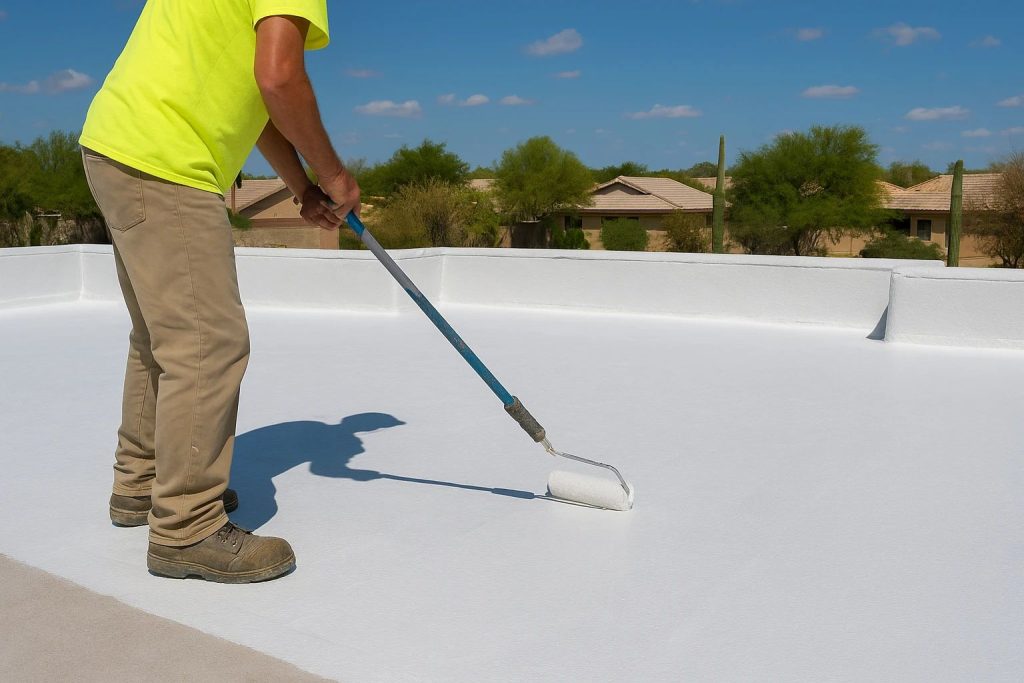
What Are Roof Coatings for Flat Roofs in Phoenix?
Roof coatings are a seamless liquid membrane applied over an existing flat roof. Under Arizona’s intense sun, the material cures and forms a durable, flexible layer. There are no joints or seams, which are the areas where leaks most often begin.
This flexibility is critical for flat roof coatings in Phoenix. In this climate, roofing materials expand during the day and contract sharply at night due to extreme temperature swings. Older roofing surfaces often become brittle under this stress and begin to crack.
Modern elastomeric coatings solve this problem through high elasticity. The roof is essentially covered with a strong, rubber-like membrane that stretches and contracts along with the building. It remains intact even with temperature fluctuations of 40–50 degrees.
Widespread use of flat roof coatings in Phoenix also helps reduce the urban heat island effect. In large cities, concrete and dark roofs absorb heat during the day and release it at night, preventing the air from cooling. Reflective roof coatings help break this cycle, allowing buildings and entire neighborhoods to cool down faster after sunset. As a result, homeowners may rely less on air conditioning and reduce electricity costs.
What does roof coating do?
The main purpose of a roof coating is to create a protective barrier on the roof. It completely seals joints and seams where water usually penetrates.
Flat roof coatings in Phoenix work like sunscreen with SPF 100. Instead of intense sunlight burning through and degrading the roof structure itself, the rays hit the protective layer. The primary roofing system underneath remains intact, flexible, and dry.
Are roof coatings a good idea?
This is one of the most effective solutions for Arizona conditions. Roof coatings slow down the aging of roofing materials caused by extreme summer heat and can help reduce air conditioning costs by 20–30%.
What are the disadvantages of roof coatings?
This is not a cure-all. Roof coatings cannot replace full repairs of rotted wooden decking or damaged insulation.
Another serious drawback is related to workmanship quality. If flat roofing companies in Phoenix fail to prepare the surface properly, dust buildup can prevent the protective layer from bonding to the existing roof.
Ponding water is also an important concern. If puddles remain on the roof after rain, lower-quality coatings may begin to peel in those areas after just a few seasons.
How Flat Roofing Specialists in Phoenix Handle Roof Coatings
Professional application of roof coatings is not just rolling paint onto a roof. Dust, extreme UV exposure, and sudden monsoon storms set strict rules. Specialists such as the team at PHOENIX ROOFING follow well-established protocols refined through repeated practice.
The process always begins with a thorough inspection. Experts look for:
- visible cracks;
- air pockets;
- areas where moisture is trapped beneath the surface.
In Arizona, this step is critical. If a roof is coated over damp insulation, trapped water turns into steam under the sun. As a result, the new coating can blister and form large bubbles.
The second and most important stage is power washing. In desert conditions, roofs are covered with a fine layer of dust and sand that cannot be removed by simple sweeping. Flat roofing companies in Phoenix use high-pressure washing combined with specialized cleaning solutions to ensure proper adhesion. Only a perfectly clean and dry surface allows the coating to bond permanently.
After washing, it is critical to allow the roof to dry completely. Depending on air humidity, this may take 24 to 48 hours. Skipping this step can lead to bubbling later.
The third stage is reinforcing critical areas. Before applying the main coating across the entire roof, specialists manually treat seams, wall transitions, and ventilation penetrations. Reinforcing mesh or thick sealants are often used in these areas. This ensures that protection is doubled at the most vulnerable points.
Special attention is given to foam roof repairs. Technicians first cut out damaged or water-soaked foam sections, fill them with fresh material, and only then seal everything with a thick elastomeric coating. Proper foam roof repairs are the only way to restore waterproofing and protect the surface from UV damage.
Many homeowners in Phoenix try to save money by applying roof coatings themselves, but common mistakes occur:
- Ignoring weather forecasts. If a coating is applied before a dust storm, sand becomes embedded in the membrane and compromises its structure.
- Overlooking material compatibility. For example, acrylic coatings cannot be applied over old silicone coatings without a special primer. Without it, the materials will not chemically bond.
Another critical beginner mistake is incorrect layer thickness. If the coating is applied too thin, it will burn out quickly under the sun. If applied too thick, it may not cure properly and can develop deep surface cracks.
When do flat roofing specialists recommend roof coatings?
Specialists recommend using a roof coating at the first signs of surface deterioration. This includes cases when the top layer begins to fade, peel, or develop a network of fine cracks. If moisture reaches the wooden decking and insulation, the damage becomes more severe and repairs become significantly more expensive. Acting early helps prevent that escalation.
How many coatings can you put on a flat roof?
According to industry standards, flat roofing companies in Phoenix typically recoat a roof no more than two times. Each additional layer adds weight and increases the structural load on the building. Multiple layers also raise the risk of delamination.
A professional roofer will always inspect the condition of the existing coating first. If there are minor areas of separation, damaged sections can be cleaned down to a stable base. If the material has fully degraded, the specialist may recommend a complete tear-off to the substrate or installing a new roof system.
What kind of maintenance does a flat roof need?
The main task is to keep the roof surface clean and ensure the drainage system functions properly. Accumulated dust and sand turn a white reflective roof into a dirty surface that absorbs heat again. Regular inspections also help identify small punctures or damage caused by falling branches or HVAC service work.
How often should a roof be recoated?
Flat roofs are generally recoated every 5 to 10 years. In local conditions, the PHOENIX ROOFING team recommends planning closer to the lower end of that range, around 5 years.
What Is the Best Roof Covering for a Flat Roof in Phoenix?
When choosing a base system for a flat roof, it is important to consider the specific operating conditions. Several options are commonly used in this region:
- TPO (Thermoplastic Olefin). Today, this is considered the gold standard for Arizona. The bright white membrane reflects ultraviolet radiation well and is resistant to punctures and chemicals. It helps keep the building cooler and can last up to 25 years. Applying a roof coating to TPO after 10–12 years of service helps “reset” its protective properties.
- EPDM (Ethylene Propylene Diene Rubber). Traditional black rubber roofing. In Phoenix conditions, this material is a primary candidate for mandatory coating. Without a white protective layer, black rubber heats up to extreme temperatures, which leads to rapid deterioration of seams.
- PVC (Polyvinyl Chloride) membrane. A premium and most durable option. It is well suited for commercial properties and residential buildings where maximum service life is a priority. Before applying a coating, PVC requires treatment with specialized primers.
- Built-Up Roofing (BUR). A classic multi-layer roofing system made of bitumen and gravel. In this case, a roof coating helps prevent the bitumen from drying out. The elastomeric layer blocks sunlight from evaporating oils within the roofing material, reducing the risk of cracking.
For clarity, we have prepared a table to help compare available roofing system options.
Comparison of Roofing Systems: Cost vs Lifespan
| Material | Upfront Cost | Lifespan | Energy Efficiency |
| Roof Coatings | Low | 5–15 years | Excellent |
| TPO (White) | Moderate | 15–25 years | Excellent |
| PVC | High | 20–30 years | Excellent |
| EPDM (Black) | Moderate | 20–25 years | Poor |
| Built-Up (BUR) | Moderate | 15–20 years | Average |
| Metal | Very High | 40+ years | Good (if white) |
Important:Spray foam roofing deserves separate mention. It is the only roofing material that physically cannot exist in Arizona without protection. That is why professional foam roof repairsalways include the application of a protective top coating. Without it, the sun will break the foam down and turn it brittle within just a few seasons.
What is the longest lasting flat roof material?
PVC membranes and standing-seam metal roofing are considered the leaders in longevity. PVC offers exceptional resistance to wear and environmental exposure, while metal roofing can last over 40 years with proper maintenance.
Which is better, EPDM or TPO?
TPO clearly outperforms black EPDM rubber. The main reason is thermal stress. White TPO membranes remain relatively cool, while black EPDM heats up to extreme temperatures under the Arizona sun.
What’s the best material to put on a flat roof in Phoenix?
The most balanced solution in terms of cost, durability, and heat protection is TPO for new installations and silicone roof coating for restoration. TPO provides a strong, reliable base, while the liquid coating forms a seamless protective “cocoon” over it. This combination delivers the strength of sheet roofing along with the joint-free protection that only a liquid membrane can provide.
How Do You Choose the Best Roof Coating for Flat Roof Homes in Phoenix?
Choosing a roof coating is a balance between the current condition of the roof, your budget, and operating conditions. Among flat roof coatings in Phoenix, three options are the most commonly used:
- Silicone. The gold standard for flat roofs. Silicone is a true “hydrophobic king.” It reflects sunlight and does not react with water. Silicone does not degrade even if it sits in standing water for weeks. The material is extremely elastic and retains its properties for 15–20 years.
- Acrylic. Budget-friendly and effective. Water-based acrylic coatings are the most affordable option. They reflect sunlight well and are easy to apply, but they have a serious limitation: they do not tolerate ponding water. If water remains on the roof for more than 48 hours, acrylic can dissolve and peel off as a film.
- Urethane. Urethane coatings are the strongest and most abrasion-resistant. This option is chosen by homeowners who expect frequent foot traffic on the roof.
If your roof is flat, water does not pond, and your budget is limited, acrylic is the right choice. It is the cheapest way to make a roof “white” and reduce air conditioning costs. However, keep in mind that this layer must be renewed every 5–7 years. Flat roofing specialists in Phoenix recommend acrylic coatings for preventive maintenance when the goal is simply to refresh protection.
If puddles remain on the roof after rain, silicone is your only option. It turns the roof into a solid, seamless rubber cocoon and seals all problem areas and cracks. In Arizona conditions, silicone pays for itself quickly due to its long service life and reliable leak protection.
If you plan to install solar panels or have heavy HVAC equipment on the roof that requires frequent servicing, choose urethane. Its structure withstands foot traffic and heavy frames without the risk of puncturing the membrane. This makes it the best investment for protecting a roof from physical wear.
Tip: Never apply acrylic over an old silicone coating. It simply will not adhere. Silicone can be applied over old acrylic, but only after thorough cleaning. If you are unsure which coating was previously used, it is best to invite a professional to identify the material.
Which coating is best for a flat roof?
It depends on the current condition of the roof surface. If water remains on the roof after rain, silicone is the right choice. If you have a newer roof with proper slope and simply want to protect it from sun fading at a minimal cost, acrylic is a suitable option.
What is the most durable roof coating?
If we are talking about sun protection and complete waterproofing, silicone is the clear leader. It is not affected by ultraviolet exposure, and standing water is not an issue for it either. If mechanical strength is the main concern, urethane will last longer. In practice, these options can be combined: flat roofing specialists in Phoenix often apply urethane only in walkways and high-traffic areas, while coating the remaining surface with silicone.
What is the cheapest flat roof covering?
The most budget-friendly option is acrylic coating. However, it is important to consider long-term costs, as acrylic requires reapplication almost twice as often. When calculating expenses over a 15-year period, silicone often turns out to be more cost-effective. It reduces the need for repeated labor and material costs every few years.
Conclude
A high-quality roof coating is the simplest way to turn an aging roof into an effective shield against the sun and postpone a costly replacement by 10–15 years. The key is choosing the right coating for your specific roof type and trusting the work to professionals. Look for a contractor with local experience in Arizona. Only local flat roofing specialists in Phoenix understands how to make materials perform reliably under Phoenix’s extreme heat.
Yes, but only if the existing layer is acrylic. If the roof is protected with silicone, regular paint will not adhere and will simply run off. Material compatibility is critical for flat roof coatings in Phoenix, especially under extreme heat.
On average, roof coating services in Phoenix range from $1.50 to $4.50 per square foot. Acrylic coatings are the most affordable, while silicone and urethane options cost more. The final price depends heavily on roof condition and required preparation work.
For Arizona conditions, silicone roof coatings perform best. They tolerate standing water and do not crack under extreme heat. If the roof has frequent foot traffic or equipment access, urethane is often a better choice.
Silicone coatings typically last 10–15 years, while acrylic coatings provide 5–7 years of protection. Actual lifespan depends on coating thickness and surface preparation quality. Proper preparation is especially important for foam roof repairs and recoating projects.
No. This usually means the coating, most often acrylic, did not fully cure before rainfall. Flat roofs require at least 24–48 hours of dry conditions to allow coatings to set properly. Failure to do so can compromise the entire protective layer.